
Color as a Mirror of Solitude and Belonging.
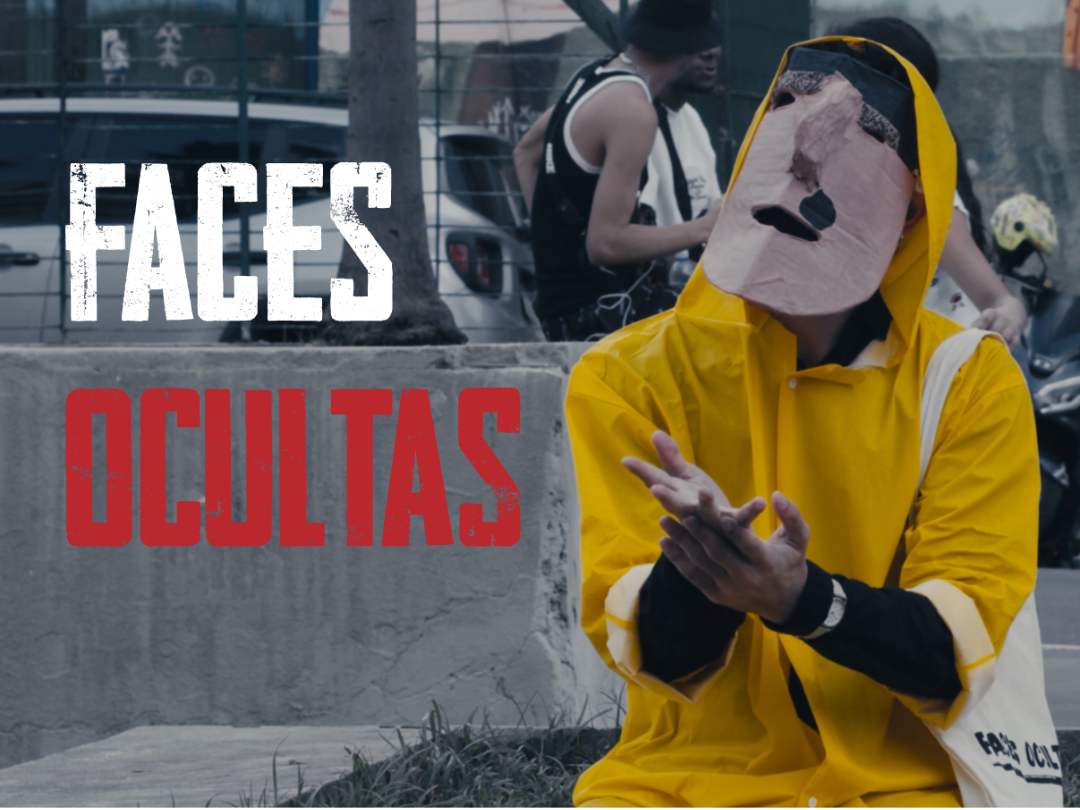
Faces Ocultas follows the journey of a masked waste collector living on the margins of society. His daily life is immersed in a gray, monotonous, and emotionally distant routine, until an unexpected encounter completely transforms his perception of the world.
The film is a short directed by Gabriel Petit, produced as a Graduation Thesis (TCC) in Audiovisual Production at FAAP. It was shot on a BMPCC 4K using analog lenses and finished entirely in DaVinci Resolve, with a workflow in DaVinci Wide Gamut (DWG) and the software’s native Kodak 2383 D65 LUT applied throughout the grading process.
Color Grading as Narrative Extension
From the very beginning, the color grading was designed to walk alongside the main character’s emotional state. The visual narrative is aesthetically divided into two parts: pre-mask and post-mask, reflecting, respectively, the moments of isolation and the protagonist’s connection with the world around him.
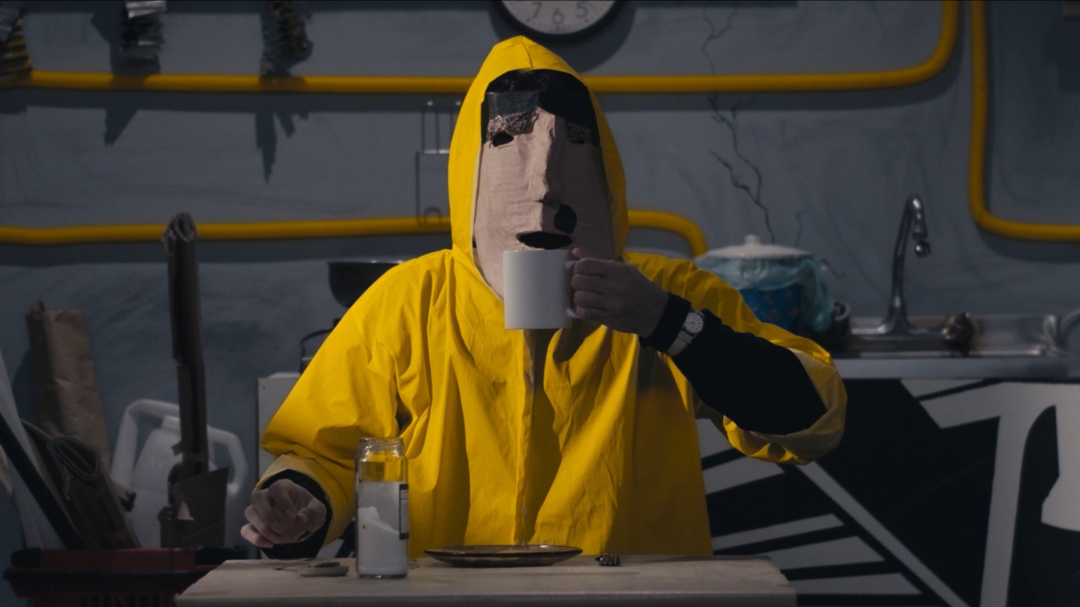
Parte 1: Pre-Mask — The colded and faded world.
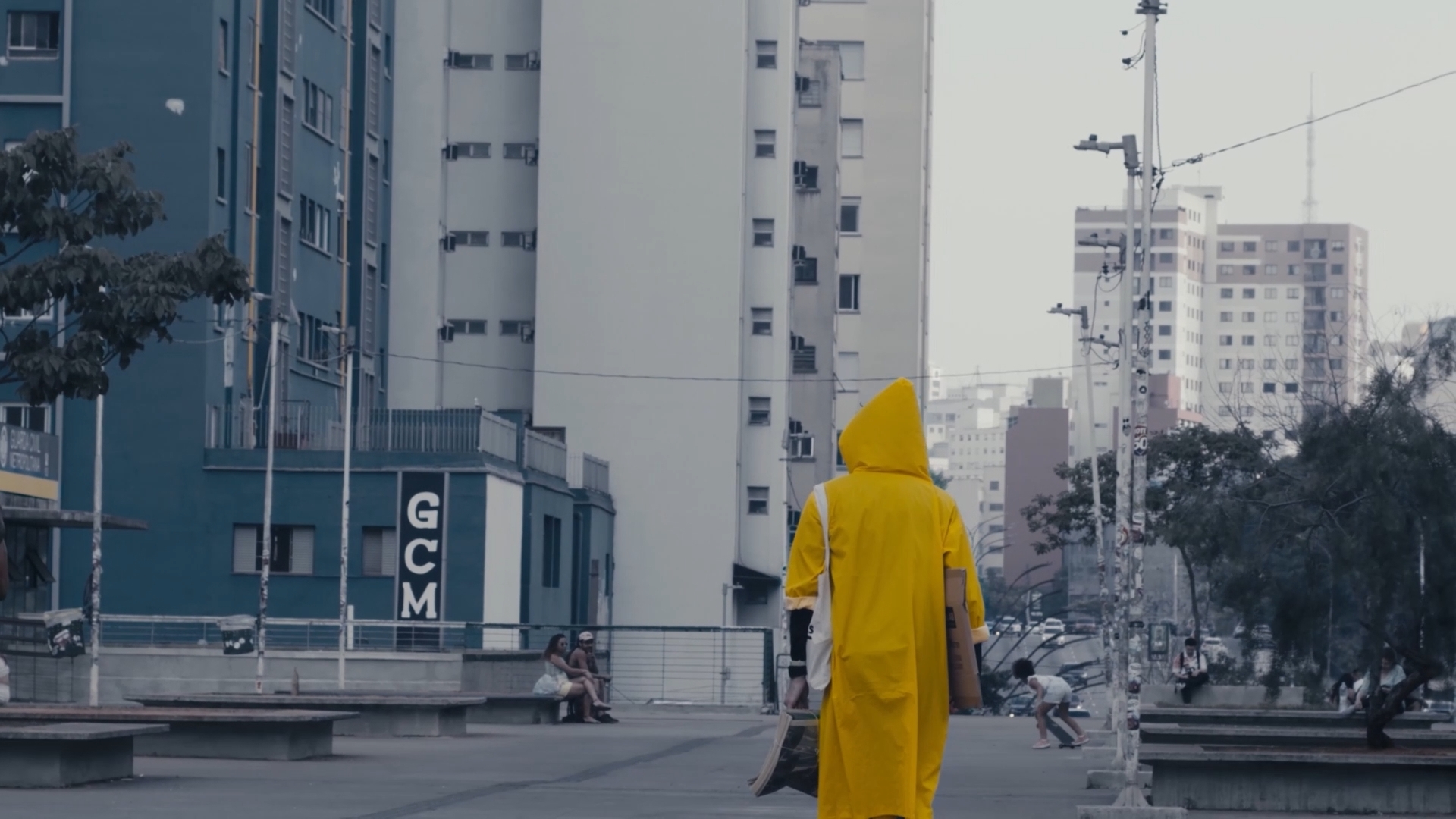
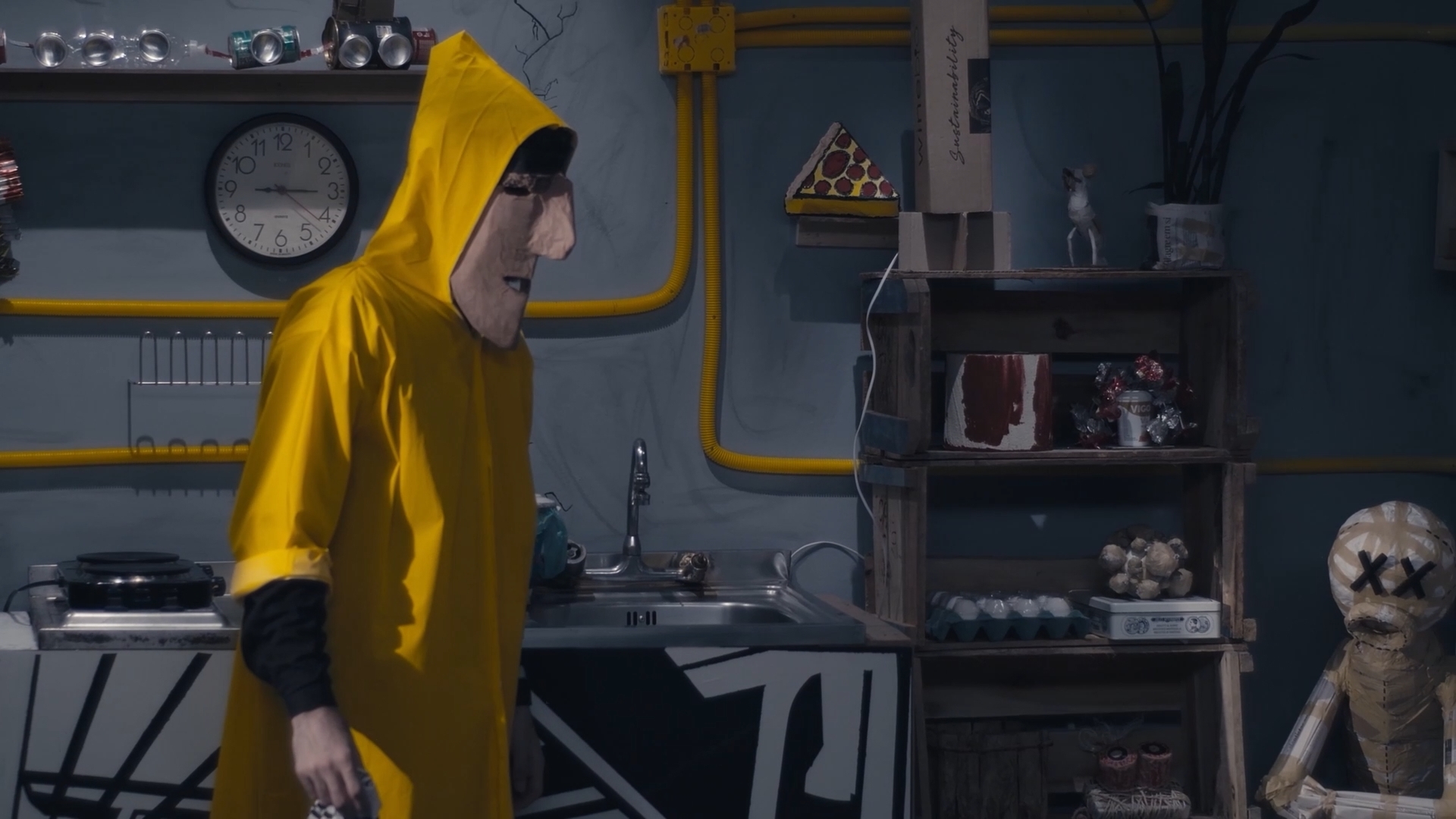
In the first half of the film, the main goal was to amplify the protagonist’s feeling of loneliness and displacement. Through selective saturation, all colors were purposely muted, with the exception of the yellows, which stand out as the sole elements of life in an environment that rejects him.
The color temperature was reduced, reinforcing a grayish and bluish palette that dominates the external environments and mirrors the city’s emotional coldness. This freezing atmosphere makes the protagonist seem even more like a foreign body—someone who does not belong in that scenery.
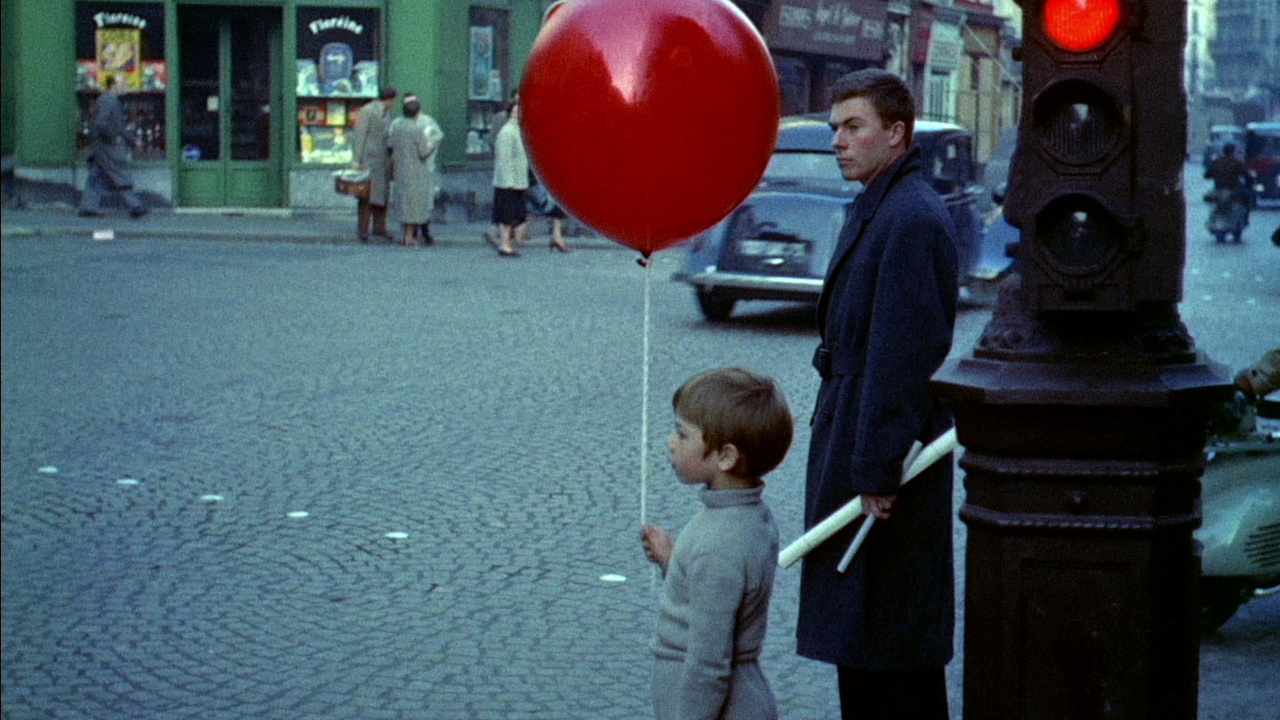
The aesthetic was inspired by the classic The Red Balloon (1956), by Albert Lamorisse—where a single colorful element contrasts with the neutrality of the surrounding world. The proposal here, however, was to intensify this contrast even further, using yellow as the character’s symbol, while the rest of the world remains a soulless space.
During this segment of the film, there are moments of emotional rupture, such as scenes involving dance, art, and music. These moments temporarily gain more color and warmth, representing glimmers of hope and the role of art as an escape and a breath of fresh air amidst the isolation.
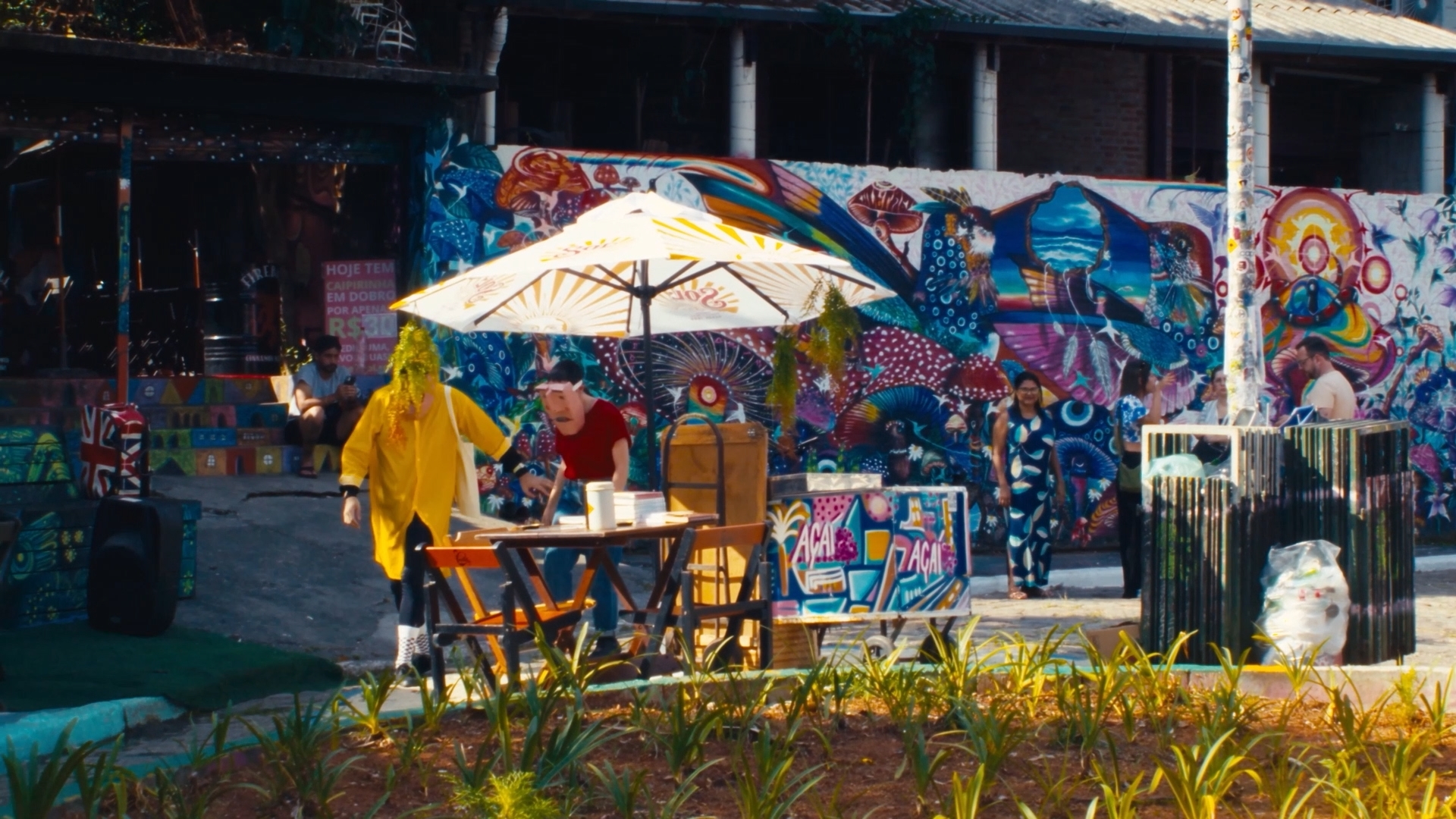
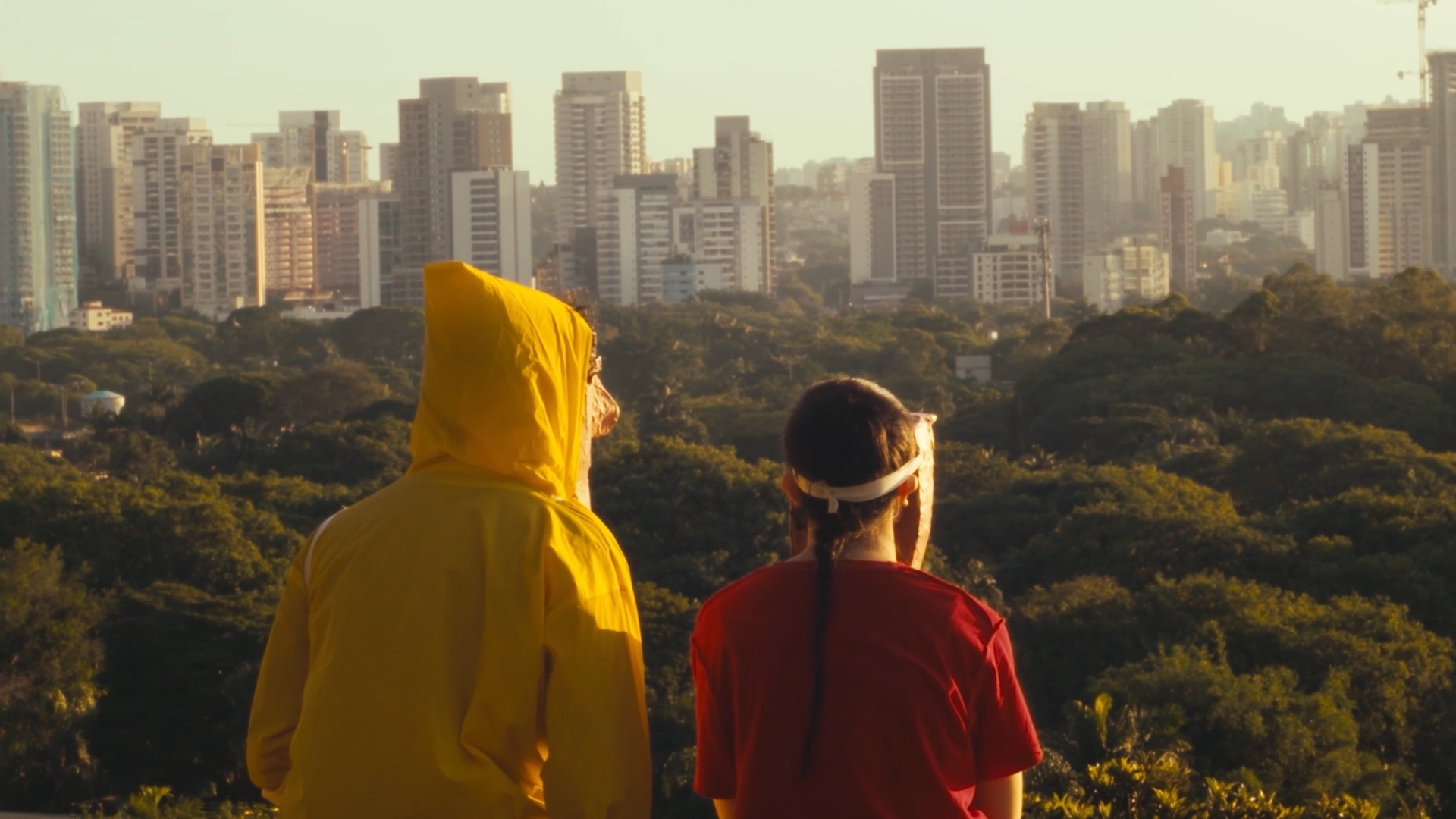
Parte 2: Post-Mask — The Warmth Belonging
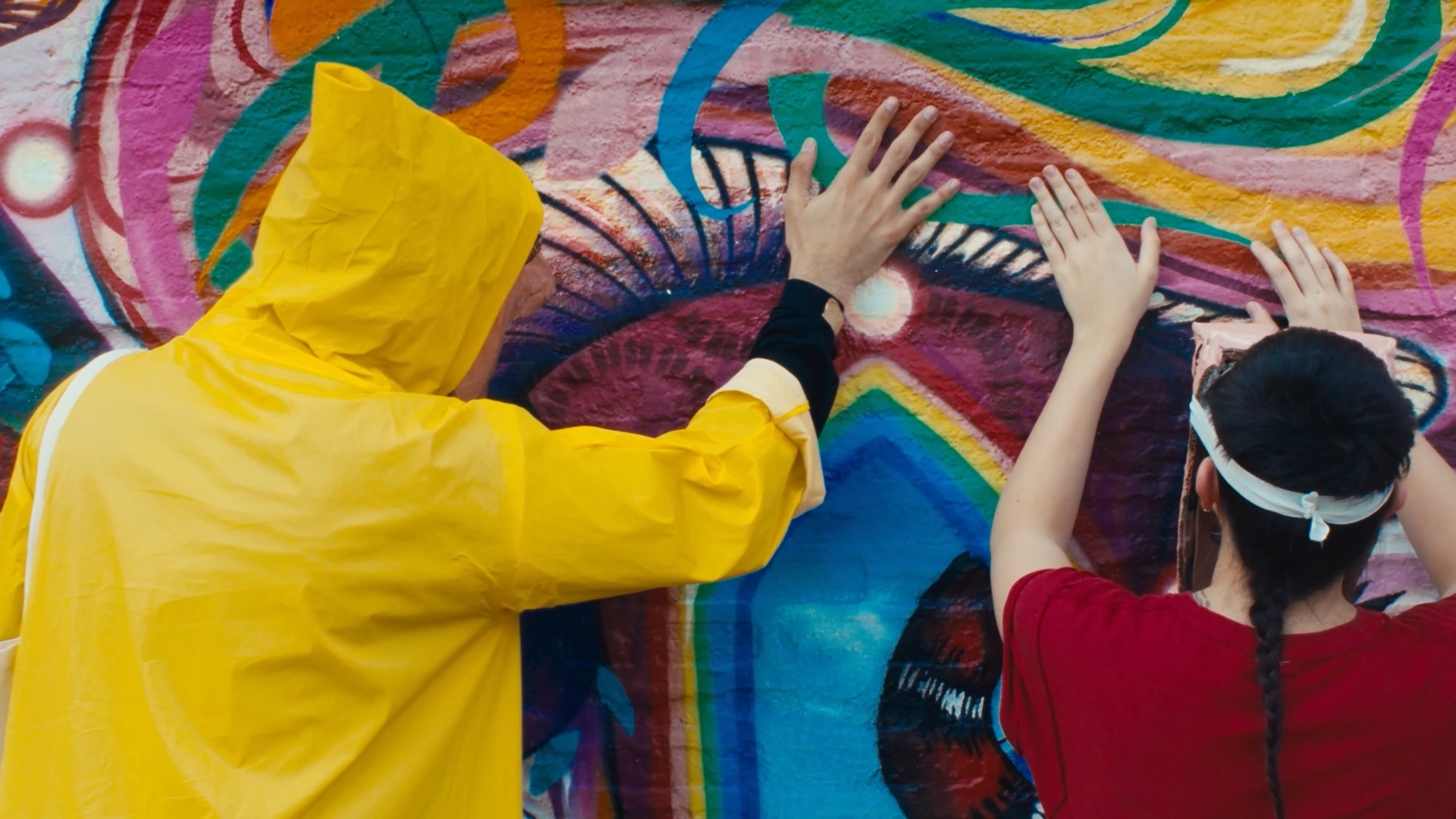
The visual turning point happens when the protagonist meets another masked figure. This inflection point marks the beginning of the film’s second act and is accompanied by a significant aesthetic shift.
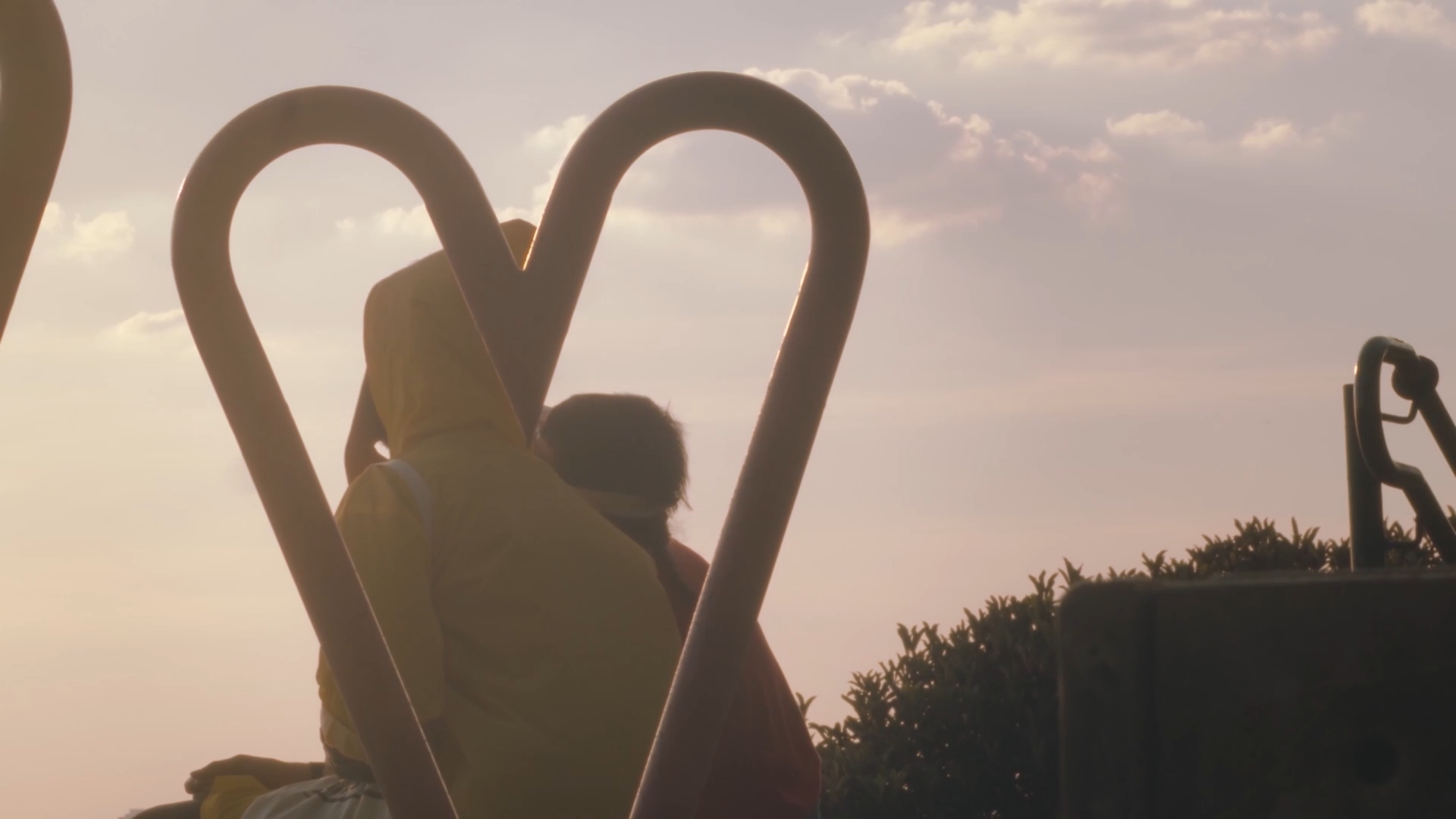
The color palette undergoes a higher and progressive saturation; orange and warm tones begin to dominate the scene, and the color temperature increases, creating a feeling of welcome and comfort.
Elements like glow and halation were subtly applied to bring a dreamlike aura to the moment, as if reality were gaining a slight veil of a dream. These effects visually reinforce the character’s emotional transformation, who, after so much time on the margins, finally finds belonging and human warmth.
Conclusion
The color work in Faces Ocultas not only builds a visual aesthetic consistent with the narrative proposal but also functions as an emotional extension of the character’s trajectory. The careful use of saturation and temperature reinforces the passage from a world of coldness and detachment to a place of connection, art, and shared life.
This grading study was made possible thanks to a collaborative process with the director, well-defined references, and a workflow that sought to preserve the analog aesthetic as much as possible, from capture to finalization.
Deixe um comentário